By Asania Aphane
Reading Time: 4 minutes, 18 seconds

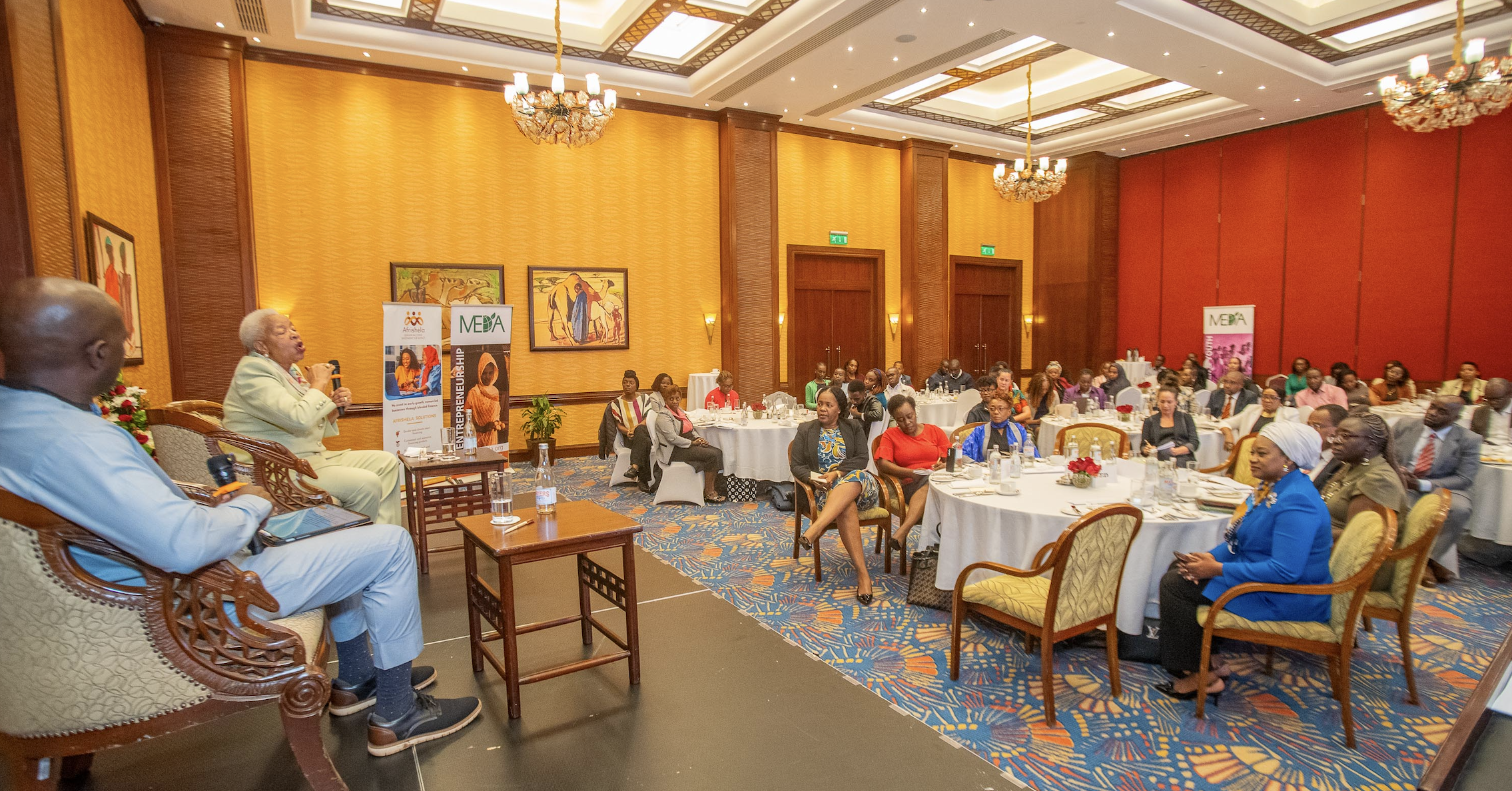
Every funder believes it understands risk. Fewer funders have sat in a room and listened, in detail, to the businesses their risk models exclude. That is what we did a few months ago, when we convened a focus group discussion with the Kenya Bankers Association, bringing together women entrepreneurs, banking specialists and coaches to talk candidly about what happens on the other side of a loan application.
We are sharing what we heard because we think it is useful data for every funder in this market, not only for us.

The single clearest message from the room was this: entrepreneurs are not asking for more finance. They are asking for finance that reflects the realities of their businesses. That distinction matters enormously for how funders should read the numbers. Collateral requirements, participants told us, exclude many viable businesses outright, particularly in the service sector, where there is often little to pledge but a great deal of contracted revenue. Loan pricing is frequently prohibitive once interest and processing costs are combined. Repayment schedules rarely account for seasonal cash-flow cycles in sectors such as agriculture, education and hospitality. And approval timelines can run past a year – long enough, on their own, to sink the opportunity the financing was meant to fund.
Gender bias surfaced repeatedly, and specifically. Participants reported being asked for spousal consent on facilities for businesses they owned outright, and described a pattern in which women-led businesses are more often offered only fully secured lending – a quiet way of declining to share risk. Mary-Lou Okoko, a senior corporate banker based in South Africa, framed the opportunity cost of getting this wrong:
It is necessary for women-owned businesses to expand their vision and capture the possibilities in the market. This pushes owners to pursue bigger opportunities that require compliance, developing an appetite for hiring experts in areas such as tax and accounting, enabling them to become corporate suppliers by meeting procurement requirements.
Mary-Lou Okoko, Senior Corporate Banker, South Africa
Businesses ready to grow into exactly the kind of formalised, compliant suppliers banks want on their books are being held back by the assessment tools meant to find them.
The sharpest critique came from sectors furthest from conventional lending logic. Caroline Karemu of the Lintons Foundation described what she called a paradox facing climate innovators:
Even when funding is guaranteed, for example by the World Bank, demand for conventional proof by banks delays funding, thereby reaching innovators only after they have proven themselves, defeating the purpose of financing innovation in the first place.
Caroline Karemu, Lintons Foundation
A risk model built for established businesses will always read early-stage innovation as unproven — even when a global development institution has already underwritten it.
Participants were equally clear about what works, and we think this is the more actionable half of the findings for funders. Referrals and timely information-sharing measurably improved outcomes: one participant secured financing at a 9% interest rate simply because someone connected her to the right lender. Group guarantees functioned as effective substitutes for traditional collateral. Demonstrated industry experience, alongside evidence of an entrepreneur’s own financial investment in the business, consistently built funder confidence — exactly the kind of signal a character- and cash-flow-based approach to assessment is designed to capture.
Mwihaki Njehu of Grace Rock Farms Ltd put a fine point on the operational cost of getting the back end wrong:
The time between an approved loan and the disbursement to account needs to be shortened because it cripples the growth plan the loan was intended for.
Mwihaki Njehu, Grace Rock Farms Ltd
Approval is not the finish line. For a growing business, the gap between approval and cash in the account is where momentum is lost.
We convened this discussion because we wanted our own approach tested against lived experience, not built in a room of investors alone. It held up. More usefully, it told us exactly where funders should focus first: repayment structures that track cash-flow reality, referral and information pathways that actually reach entrepreneurs, and evidence models that read character and commitment as bankable signals in their own right.
Jane MBINYa, Senior Investment Officer, Afrishela
This is also the point at which listening needs to become a commitment. In May 2026, on the sidelines of the Africa Forward Summit, Afrishela hosted a Blended Finance in Africa breakfast with the African Venture Philanthropy Alliance and MEDA. The room included fund managers, institutional investors, development finance institutions (DFIs), philanthropists and policymakers. The diagnosis was the same one entrepreneurs gave us in July: capital exists; the problem is how it is channelled, priced and underwritten.
Andia Chakava put it plainly then: blended finance lets different pools of capital work together, but it requires compromise, not only collaboration – guarantees, first-loss capital, technical assistance and assessment tools that make missing-middle files investable for domestic as well as development capital.
We are therefore asking funders, banks, DFIs and ecosystem partners to do two things that sit together. First, test or adopt an alternative credit assessment standard, so that cash flow, character and market evidence can carry a file when a title deed cannot. Second, put concessional and catalytic capital to work behind that standard: first-loss capital, guarantees, and technical assistance that follow the investment rather than stop at the workshop door. That is the practical meaning of the question H.E. Mrs Graça Machel left the May forum with:
What happens after we leave this room?
H.E. Mrs Graça Machel, at the May forum
Assessment without capital design will not close the gap. Capital design without better assessment will keep missing the same underserved segments. If your institution is ready to underwrite differently, or to join other market players within this initiative, please reach out to us at investment@afrishela.com so we can share the declaration and sign-up form.